Part III How I Made $0 with AI

Yurie Jiyūbō
And just when all hope was lost, part three of my saga finally dropped.😁
After realizing that I’d completely and irreversibly lost access to my page, I decided to try my luck on another spicy platform.
I watched a bunch of hyped-up videos about virtual models making their creators tens of thousands of dollars a month.💵 Then I fell down the rabbit hole of videos about neural networks, base models, LoRAs, all that good stuff. And I thought: why not? What’s so hard about creating an AI character and selling content on behalf of a virtual model?
💭There were also fantasies about automating the whole content pipeline, because honestly, once university started again, I barely had time to shoot spicy pics. Plus, my imagination was running on fumes… and, well, my anime character got banned too (still hurts, by the way).
Half a year ago, I was young and naive, trying to somehow impress the demanding audience of adult platforms. Oh, sweet summer child 😄
Anyway, a bold decision was made: I would create my own virtual AI model.💃🏽
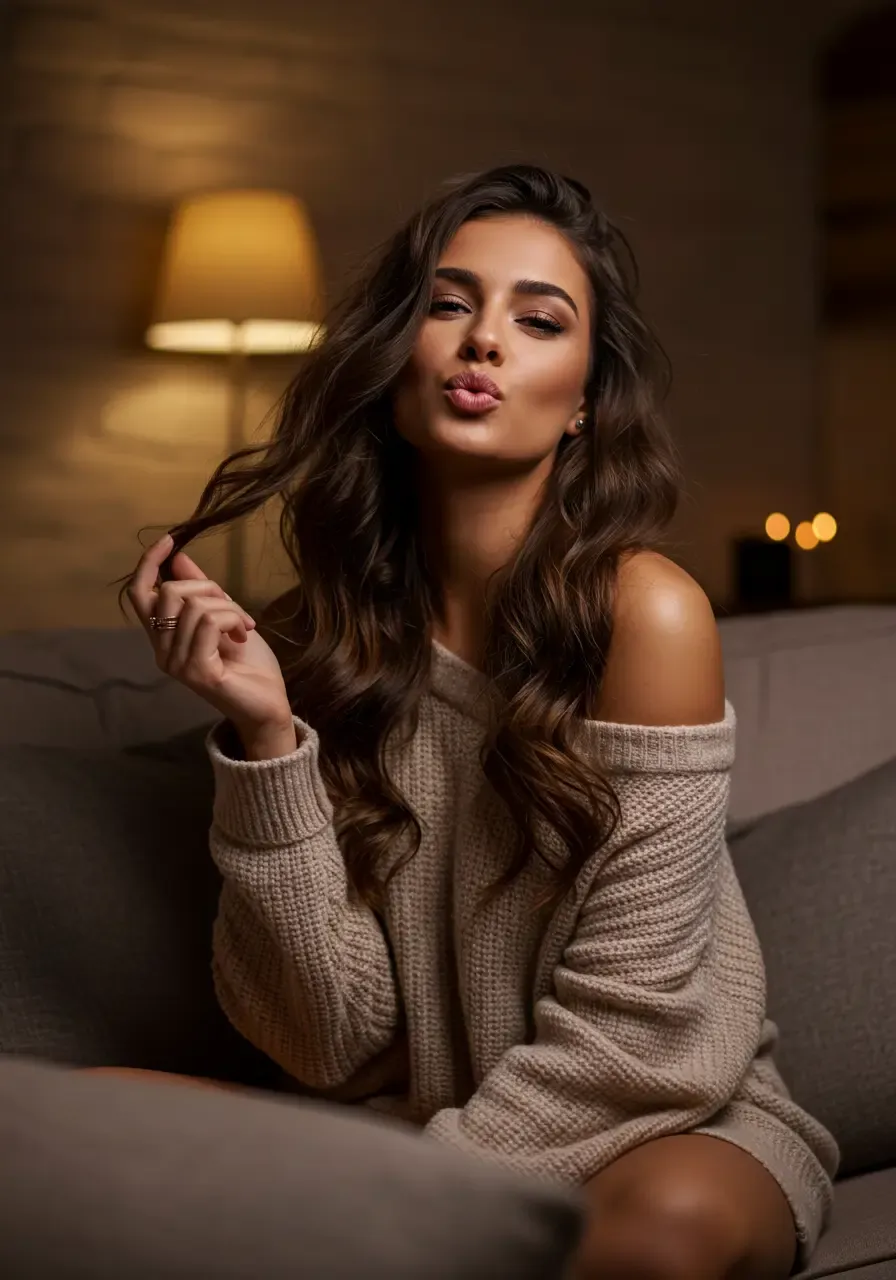 Did I overdo it?
And here came the first problem. Generating a realistic portrait isn’t hard — most modern generative models can handle that. The real challenge is realism over time. Natural-looking photos require the same face shown from different angles, in different poses, with different expressions. And back then, convincing a neural network to consistently generate the same person was… not trivial. Most of the time, it was a completely different human being.
On the other hand, if the resemblance is too perfect, that usually means everyone using the same base model can generate the exact same face. And if anyone can easily generate their own AI girlfriend, why would they pay for mine? Right?
So, using a carefully crafted prompt, I created a portrait that looked both realistic and original (obviously, I made my virtual model ridiculously attractive). The goal was to force the neural network to always generate that face when needed. There were two ways to do this:
1️⃣ Face swap. Basically pasting your chosen face onto another character. There are tons of services and apps that do this — free and paid. The results vary wildly. Often it looks uncanny, sometimes surprisingly believable, but usually… questionable.
2️⃣ Training a LoRA. A low-rank model trained to produce a so-called “consistent character” — a virtual influencer with stable facial and body features you actually recognize.
As I mentioned, I binge-watched tutorials and started gathering training data for my LoRA. Training happens on top of a base model like SDXL, FLUX, etc. Depending on the model, you need a specific number of images at a specific resolution. These images should show your virtual influencer in different poses, from different angles, in different environments.
Some people even warn that training images must be perfectly clean — no artifacts, distortions, or weird elements — because the neural network will happily learn those too and reproduce them later.
And here the circle closed.🔄
To get high-quality, consistent images of my character, I needed a LoRA trained on high-quality, consistent images of that same character. But that wasn’t even the end of it.
Let’s say, by some miracle, you manage to get 20–30 training images. Now you need to caption every single one with tags so the model can figure out which features are constant (the character) and which are variable (everything else).
And this is where I completely hit a wall.
Some bloggers say you should describe everything in extreme detail using short tags — the more detailed, the better the final result. This is the most popular opinion. I tried training LoRAs this way multiple times. Every single attempt failed spectacularly. The generated images barely resembled the training data. No consistent character whatsoever.
There’s also another school of thought: only tag the non-constant things — clothing, hairstyle, furniture, environment, lighting, etc. Basically, everything that can change. There are YouTube videos explaining this approach in detail, but I’ll be honest — I still haven’t fully mastered it. All my models stubbornly refused to generate what I wanted.
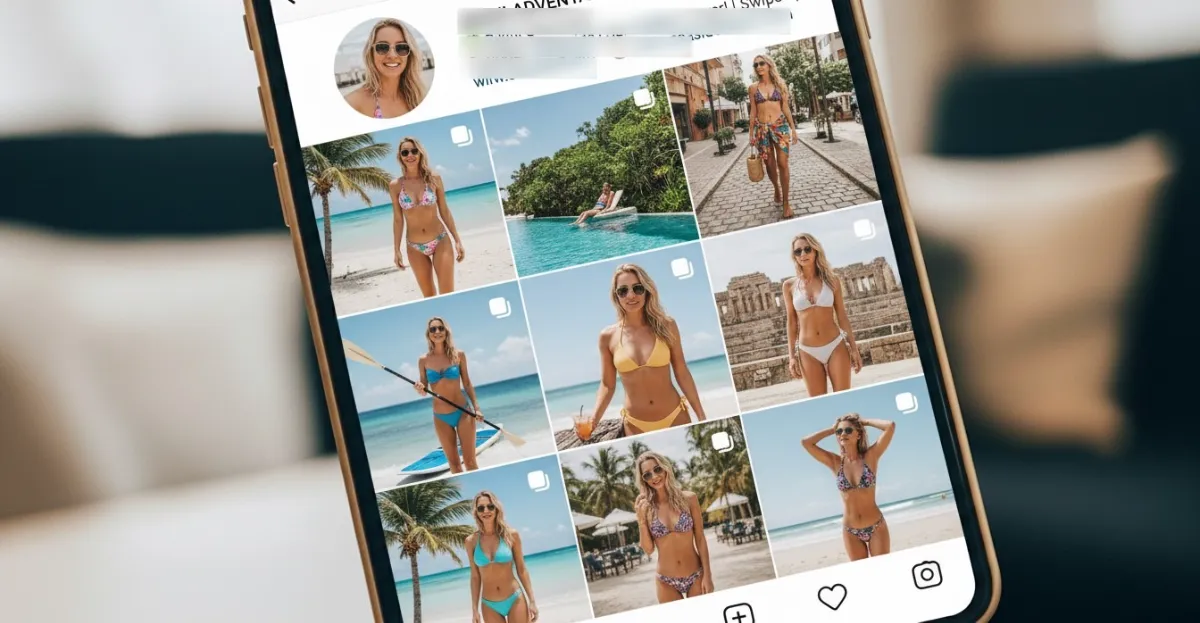
Anyway, I decided to move on. Since I already had some content, I tried to monetize it. I registered on another platform and started filling out the profile of my virtual influencer.
 Say what you want, but I think it’s kinda great. I may have fallen in love with it 😜
The generated content ran out quickly, and consistent promotion on these platforms requires regular uploads — photos or videos. Otherwise, your AI model simply disappears into the endless sea of other creators.
Progress was painfully slow. Generating realistic NSFW images took a huge amount of time — which I didn’t have, thanks to university. After a full week, I had exactly zero paid subscribers. People visited the page, left likes… but nobody decided to support me financially.
My theory? My model was too pretty and scared away the shy and fragile visitors of this virtual brothel 😄
Sure, with a more professional approach, it’s probably possible to make money. But that would require serious graphic design skills and much more powerful (and expensive) hardware. I, on the other hand, used only free tools, free software, and neural networks running on free cloud GPUs.
In conclusion: despite the complete fiasco, I don’t think the time was wasted.
As my school teacher used to say: “Zero is also a result” 😄
It was an interesting experience. It didn’t bring me any income, but it did let me touch cutting-edge tech and explore modern developments in artificial intelligence.
Did you really think that was the end of my experiments? More coming next…